Would You Freeze in an Emergency? Why Great People Hesitate and How Training Can Help
Most of us would like to believe that, in an emergency, we would step forward immediately, remember everything we had been taught and know exactly what to do.
But real emergencies rarely happen calmly.
Someone collapses. A fire alarm sounds. Smoke affects the usual escape route. A person begins to fall during a transfer. People look at one another, waiting for somebody else to take charge. Sound familiar?
For a few moments, even a capable and caring person can hesitate.
That does not necessarily mean they were not paying attention during their training. It does not mean they are weak, and it certainly does not mean they do not want to help. It means there can be a considerable difference between understanding something in a classroom and recalling and applying it when the situation suddenly feels real.
At Essential 6, this is one of the reasons we believe training must do more than transfer information. Learners need opportunities to see, hear, feel, practise, make decisions and reflect. They need to experience enough of the situation during training that, if it happens for real, it does not feel entirely unfamiliar.
Our aim is not simply to help somebody pass a course. We want them to leave feeling better prepared to act when it matters.
Why do people sometimes freeze in an emergency?
When something unexpected happens, our brains have to process a great deal of information very quickly.
What has happened? Is there danger and will i get hurt? Am I the right person to help? What should I do first? Has somebody else called for assistance? What if I make a mistake?
While those questions are being processed, a person may momentarily stop, become unusually quiet, repeat the same action or look towards others for direction. In a group, several people can each assume that somebody else is more experienced and will take control.
This is why knowing the theory is only one part of being prepared.
A learner might be able to answer every question on a presentation but still find it difficult to act when faced with noise, pressure, equipment, other people and an unfolding situation. Practical confidence grows when people have already rehearsed the decisions and actions they may need to take.
Would you know your first three actions?
You cannot prepare for every possible detail of an emergency, but you can make the first moments less overwhelming.
Ask yourself:
- Could I recognise that something was wrong?
- Would I stop and check for immediate danger?
- Would I know how to raise the alarm or summon the correct help?
- Could I give one person a clear instruction rather than hoping somebody acts?
- Would I remember the first practical action expected of me?
- Could I use the equipment provided in my workplace?
- Have I physically practised these actions, or have I only read about them?
Clear first actions help to turn a confusing situation into a manageable sequence. Once people begin doing something purposeful, they are often better able to recall the next stage of their training.
Why practical experience changes learning
People do not all learn in the same way, and listening to a trainer or watching power point slides and videos has its limits particularly when the subject involves physical skills, judgement or human behaviour.
Effective learning often moves through a cycle:
- Concrete experience: the learner does or experiences something.
- Reflection: they consider what happened and how it felt.
- Understanding: the trainer helps them connect the experience to the principles, risks and correct practice.
- Application: the learner tries again and applies what they have learned.
This is much more powerful than demonstrating a skill once and asking, “Does everyone understand?” learners need to be involved and take ownership learning through reflection.
During an experience, learners notice things they may never have considered. During reflection, they can identify what surprised them, what felt difficult and what they would do differently. They then practise again with a clearer understanding.
That combination of experience, reflection, explanation and repeated application helps create stronger and more useful learning. It gives the learner something meaningful to recallnot just a page of notes and ultimately gain confidence in their newly aquired skills.
Fire training: experiencing the decisions, not just discussing them
Fire safety is a clear example of the difference between knowing and doing.
It is relatively easy to look at a picture of a fire extinguisher and discuss how it works. It is very different to stand in front of a controlled fire simulator, select the appropriate extinguisher, operate it correctly and experience the distance, movement and decision making involved when under a little pressure.
On relevant Essential 6 fire courses, learners can use our live fire simulator rig and discharge real training extinguishers in a safe, controlled environment. This allows them to develop practical familiarity with equipment they may otherwise be expected to use for the first time during a frightening incident.
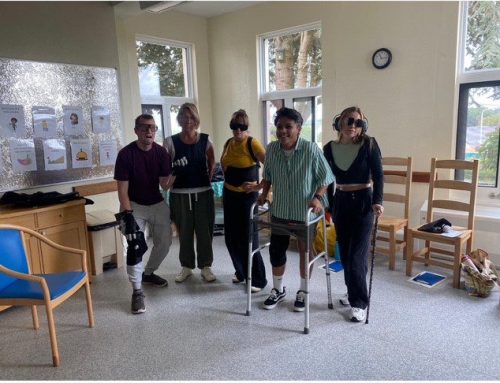
We also use smoke simulation goggles to demonstrate how quickly familiar surroundings can become difficult to navigate when visibility is reduced.
The goggles do not recreate every aspect of a real fire, nor are they intended to. They provide a safe learning experience that changes the learner’s visual information and challenges assumptions.
People who confidently say, “I know where the exit is,” can suddenly appreciate why escape routes must remain clear, why emergency lighting and way finding signage matter, why people may move more slowly and why evacuation procedures need to be practised rather than left in a folder.
Afterwards, the most important part is the conversation:
- What changed when your vision was restricted?
- What did you instinctively reach for?
- Did you slow down or become uncertain?
- How would this affect a visitor or colleague who did not know the building?
- What could prevent a safe evacuation in your actual workplace?
The experience creates the question. Reflection turns it into learning. Practice helps the learner apply it and by joining all this together a learner fully understands it!
Moving and handling: confidence must be built through safe practice
Moving and handling cannot be learned properly by slides alone.
Learners need to understand risk assessment, communication, individual needs, safer movement principles and the correct use of equipment. But they also need to feel positioning, balance, posture, load, space/environment and the effect of their own movements.
During practical training, learners can rehearse techniques in a supervised environment, receive immediate feedback and make corrections before those habits are carried back into the workplace.
They also experience the situation from different perspectives. When appropriate and safe, taking the role of the person being supported can be especially valuable. It can reveal how vulnerable it feels when somebody moves without explaining, rushes the task, handles equipment without confidence or fails to listen.
That concrete experience can change professional behaviour. The learner is no longer remembering only a rule about communication and dignity; they can recall what good or poor practice actually felt like.
This matters because safe moving and handling is not simply about completing a manoeuvre. It is about protecting everyone involved while maintaining the person’s dignity, choice, comfort and independence.
The GERT suit: understanding ageing and frailty through experience
Ageing and frailty are often taught through descriptions: reduced mobility, joint stiffness, changes in vision or hearing, loss of strength and difficulty completing everyday activities.
These points may be understood intellectually, but they can remain abstract.
Our GERT age simulation suit allows learners to experience a combination of age related physical limitations in a safe and structured way. The equipment can restrict movement, affect dexterity and simulate changes that make familiar activities more demanding.
The purpose is not to suggest that every older person has the same experience. Ageing is individual, and no suit can tell us exactly what another person feels.
What it can do is challenge assumptions.
A task that appeared simple may take longer. An instruction that seemed clear may become difficult to follow. A learner may notice how quickly frustration develops when somebody is hurried or when help is given without first asking what is needed.
The learning becomes especially valuable when the experience is followed by skilled reflection:
- Did you feel rushed?
- What support helped, and what support took away your independence?
- How did the environment affect you?
- Did the person assisting you explain what they were doing?
- What will you change in your professional practice?
Learners frequently tell us that this kind of experience helps them understand the importance of patience, communication, empathy and person-centred support in a completely different way.
The lesson is no longer simply “be patient.” The learner now has an experience that gives the words meaning.
Immersive training is not about making learning theatrical
Immersive training should never be used simply as entertainment or to make a course look impressive.
The equipment is not the learning on its own.
A smoke simulation goggle, fire simulator, handling aid or age simulation suit becomes educational when it is connected to a clear learning outcome, introduced safely, facilitated by a knowledgeable trainer and followed by meaningful reflection and further practice.
Without that structure, an activity can be memorable but still fail to improve workplace behaviour.
Our trainers use practical experiences as part of a wider learning process. They ask questions, observe performance, correct unsafe practice, explain the reasons behind each action and give learners opportunities to try again.
We want the learner to move through three important stages:
- I have heard what to do.
- I have practised what to do.
- I understand why it matters and feel more confident doing it.
That final stage is where training begins to become useful in the real world.
Can immersive training guarantee that nobody will freeze?
No responsible training provider should make that promise.
Every emergency is different, and people can react differently when placed under genuine pressure. Training cannot recreate every emotion, hazard or complication that may occur.
What good training can do is reduce unfamiliarity.
It can give learners a practised starting point. It can help them recognise equipment, recall a sequence, communicate clearly and make decisions. It can expose misunderstandings while there is still time to correct them. It can also help people appreciate how other individuals may experience the same situation.
The goal is not to frighten people. It is to build realistic confidence in a safe and supportive environment.
What makes learning more likely to stay with us?
We believe learning is more likely to be retained and applied when it is:
- relevant to the learner’s actual role and workplace;
- connected to a meaningful experience;
- practical rather than entirely passive;
- repeated, discussed and reflected upon;
- supported by clear explanations;
- corrected through constructive feedback;
- revisited through drills, updates and refresher training; and
- delivered in an environment where learners feel safe to ask questions and make mistakes.
This is why we do not judge the success of training only by whether the slides were covered or the certificates were issued.
We look for understanding, participation, practical ability and the confidence to apply the learning afterwards.
Five ways to keep your learning alive after a course
Training should continue to influence practice after the day itself. Learners and employers can help by:
1. Revisit your first actions
Do not try to memorise an entire manual. Start by making sure you know how to recognise the problem, protect yourself and others, summon help and begin the correct response.
2. Become familiar with workplace equipment
Do you know where the first aid kit, defibrillator, fire extinguishers, evacuation equipment and relevant moving and handling aids are located? Could you access them quickly?
3. Take part in drills and short practice sessions
Brief, regular practice can reveal problems that are easy to miss during discussion. It can also keep actions familiar between formal courses.
4. Talk through realistic scenarios
Ask, “What would we do if this happened here?” Use the real building, data from previous accidents or incidents, staffing arrangements, equipment and people you support when considering the answer.
5. Speak up when confidence has faded
Waiting for a certificate to expire is not always the right response. If you no longer feel able to perform an important skill safely, tell your manager and seek appropriate support or refresher training.
The real test is not the certificate
A certificate records that training was successfully completed at a particular point in time. It is important, but it is not the moment that training is ultimately for.
The real moment may come months later:
When somebody collapses.
When the usual exit cannot be used.
When a person begins to fall.
When a colleague looks directly at you and asks, “What do we do?”
In that moment, we want learners to have more than a vague memory of a presentation. We want them to recognise the situation, recall their training and take the first useful action.
That is why Essential 6 is committed to practical, engaging and immersive training. Through concrete experience, reflection, expert explanation and repeated application, we help people develop learning that has meaning and confidence they can carry back into their workplace.
Because training should not simply prepare somebody to pass.
It should prepare them to respond when it matters.
Talk to Essential 6
Essential 6 provides practical workplace training at our training centre in Torquay and at client premises across the UK.
If you would like to discuss immersive fire safety training, moving and handling, our Ageing and Frailty Immersive Experience using the GERT suit, first aid or another workplace training requirement, contact our team on 01803 26 66 66 or email info@essential6.co.uk.
We will help you consider what your learners actually need to know, experience and be able to do not simply which certificate they need to hold.