How Many First Aiders Do I Need at Work? A Practical UK Employer’s Guide
“How many first aiders do we legally need?”
It is one of the questions employers ask us most often. It sounds as though there should be a simple answer: one first aider for every 20, 50 or 100 employees.
The honest answer is that there is no single legal ratio that applies to every workplace.
Under the Health and Safety (First-Aid) Regulations 1981, employers must provide “adequate and appropriate” equipment, facilities and people so employees can receive immediate attention if they are injured or become ill at work.
What is adequate and appropriate for a small office will not necessarily be suitable for a care service, school, warehouse, construction company or organisation operating across several sites.
The right level of provision must come from a first aid needs assessment.
- The first aid needs assessment should determine:
- Whether you need trained first aiders
- How many trained people you require
- Whether they need Emergency First Aid at Work or First Aid at Work training
- Where first aiders need to be located
- How you will maintain cover during shifts, holidays, sickness, meetings and off site work
- Whether additional training is needed for particular workplace risks
- What first aid equipment you may need
At Essential 6, we encourage employers to look beyond the number of certificates held by the business. The more important question is:
“If somebody became seriously ill or injured today, would an appropriately trained and confident person actually be available to help?”
Is there a legal ratio of first aiders to employees?
No. UK law does not state that every employer must have one first aider for a fixed number of employees.
The Health and Safety Executive makes clear that there are no hard and fast rules about how many trained first aiders a workplace should have. It depends on the nature of the work, the risks involved and the workplace’s circumstances. However HSE guidance does provide suggested minimum levels that employers can use as a starting point.
Indicative HSE guidance
Workplace circumstances, Suggested starting point;
Lower-hazard workplace – with fewer than 25 employees – At least one appointed person
Lower hazard workplace with 25–50 employees – At least one person trained in Emergency First Aid at Work
Lower hazard workplace with more than 50 employees – At least one person trained in First Aid at Work for every 100 employees, or part thereof
Higher hazard workplace with fewer than five employees – At least one appointed person
Higher hazard workplace with 5–50 employees – At least one person trained in Emergency First Aid at Work or First Aid at Work, depending on the likely injuries
Higher hazard workplace with more than 50 employees – At least one person trained in First Aid at Work for every 50 employees, or part thereof
These figures are guidance, not an automatic answer and not a maximum.
Your assessment may show that you need more people because of shift patterns, separate floors, remote locations, lone workers, vulnerable people, travel times, previous incidents or specific hazards.
For example, a business may employ 80 people and have several qualified first aiders on its records. However, if they all work in the same department or on the same shift, the rest of the workforce may still be left without suitable cover.
What is a first aid needs assessment?
A first aid needs assessment is the employer’s examination of what could realistically happen at work and what provision would be needed to respond effectively.
It should be specific to your organisation. Copying another company’s arrangements or relying only on the total number of employees is unlikely to give you the full answer.
A useful assessment should consider the following areas.
- The hazards and risks within your workplace
Start with the nature of the work.
An office may mainly need to plan for sudden illness, slips, trips, minor injuries and medical emergencies. A factory, warehouse, workshop or construction site may also have risks involving machinery, work at height, vehicles, electricity, chemicals, burns, crushing injuries or severe bleeding.
Your existing risk assessments, accident records, riddor reports and near miss reports should help identify the injuries or illnesses your first aid arrangements may need to address.
You should also consider whether standard Emergency First Aid at Work or First Aid at Work training provides everything your team needs. Some workplaces may benefit from additional training relating to severe bleeding, burns, anaphylaxis, paediatric emergencies or other role and environment specific risks.
- The size of your workforce
The number of people at work matters, but it should not be considered in isolation.
Ask how many employees are normally present at the busiest time, not only how many are employed in total. Include temporary workers, agency staff and changing staffing levels where relevant.
A larger workforce usually requires more first aid provision, but even a small team may need a trained first aider where the work is higher risk or emergency help could take longer to arrive.
- Shift patterns and working hours
First aid cover is needed whenever employees are at work.
If your organisation operates early, late, night or weekend shifts, your assessment should check each period separately. Having several first aiders on the day shift does not provide cover for the night team.
Consider:
- Who is present on every shift?
- What happens during handovers?
- Is overtime worked?
- Are cleaners, maintenance staff or security teams present outside normal hours?
- Does the level of risk change at certain times?
- Holidays, sickness, training and meetings
A certificate does not provide cover if its holder is absent.
Employers should allow for foreseeable absences such as annual leave, sickness, training days, external appointments and hybrid working. If your arrangements depend entirely on one person always being present, they are unlikely to be resilient and also ask yourself “what if that person needs first aid” who is likely to assist them?
This is why the number you train will often need to be higher than the minimum number you want available at any one time.
- The layout and location of your workplace
Think about how quickly a first aider could reach somebody.
One first aider may not provide effective cover across several floors, separate buildings, a large warehouse, an extensive outdoor site or multiple locations.
Locked doors, security controls, lifts, stairs, machinery, noise and poor mobile phone reception may all affect the response.
The question is not simply, “Is a first aider somewhere on site?” It is, “Can the right person and the right equipment reach the casualty quickly and safely?”
- Lone, mobile, remote and home workers
People do not always work in a central building.
Your assessment should consider employees who:
- Work alone
- Visit clients or patients
- Travel between locations
- Work in the community
- Drive for work
- Carry out maintenance or deliveries
- Work remotely or from home
- Attend temporary work sites
The answer may involve training, mobile first aid kits and locations, communication arrangements, check in procedures or other controls appropriate to the risk.
Homeworkers should also be included in your first aid needs assessment. The provision required will depend on the work they perform and the risks involved.
- Distance from emergency medical help
First aid is not a replacement for the emergency services, but the time it may take professional help to arrive is very relevant.
A remote, rural or difficult to access site with variable weather conditions may need stronger arrangements than a low risk workplace located close to emergency medical support.
Employers should not assume that calling 999 is, by itself, an adequate first aid plan. Immediate assistance in the first few minutes can be critical.
- Employees with particular needs
Your assessment should take account of your actual workforce.
There may be employees with known health conditions such as diabetes, asthma, angina, disabilities, pregnancy related needs or other factors that affect emergency planning. This should be handled appropriately, respectfully and with regard to confidentiality.
The aim is not to label individuals. It is to ensure that foreseeable needs have been considered and that staff know how to summon appropriate help.
- Members of the public and other people on your premises
The First Aid Regulations place duties on employers in relation to their employees. HSE strongly recommends that employers also consider non-employees when assessing provision.
Depending on your organisation, this could include:
- Customers and visitors
- Patients and service users
- Children and students
- Contractors
- Volunteers
- Event attendees
- Residents or guests
A workplace that regularly welcomes large numbers of people may decide that its first aid provision should reflect this, even though those people are not employees.
- Previous accidents, illnesses and near misses
Your own records can reveal more than a generic checklist.
Look for patterns and trends and ask:
- What types of incidents have occurred?
- Where and when did they happen?
- Was a first aider available?
- Was the equipment appropriate and accessible?
- Did anything delay the response?
- Were staff confident about what to do?
Your assessment should be reviewed when incidents expose weaknesses, when your work changes or when you have reason to believe the existing arrangements are no longer adequate.
- What is the difference between an appointed person and a first aider?
This is an important distinction.
An appointed person is someone designated to take charge of first aid arrangements. Their responsibilities may include looking after the first aid equipment and calling the emergency services when required.
An appointed person does not have to be trained in first aid and should not be described as a first aider unless they hold an appropriate current qualification.
Where your needs assessment identifies that trained first aiders are required, simply naming an appointed person is not enough.
Even where trained first aiders are in place, it is sensible to ensure somebody knows how to manage the arrangements, monitor supplies and coordinate help.
- Do we need Emergency First Aid at Work or First Aid at Work?
Your first aid needs assessment should guide the level of training.
Emergency First Aid at Work (EFAW)
EFAW is generally designed for workplaces where the assessment identifies a need for emergency level first aid skills. It equips learners to provide immediate assistance for a range of emergencies until further help arrives.
First Aid at Work (FAW)
FAW provides broader training and covers a wider range of injuries and illnesses. It may be more appropriate for higher hazard workplaces, larger organisations or environments where the foreseeable needs require a greater depth of knowledge and practical competence.
The decision should not be made only on which course is shorter or cheaper.
Ask:
- What injuries or illnesses could reasonably occur?
- What level of response might be needed?
- How far away is further medical help?
- Are there workplace specific hazards?
- Does the person’s role or sector require additional competence?
Choosing the correct course protects the employer, but more importantly, it better prepares the first aider to respond when a colleague needs them.
- How many people should we actually train?
Start with the number of appropriately trained first aiders your assessment says must be available at any one time. Then work backwards through the realities of your organisation.
If you need two first aiders available during each shift, training only two people will not be sufficient. Holidays, illness, meetings or staff turnover could immediately remove your cover.
You may need to train additional people to provide resilience. We suggest checking your proposed number against five practical questions:
- Is suitable cover available during every shift and working period?
- Are holidays, sickness and other foreseeable absences covered?
- Can a first aider reach every part of the workplace quickly?
- Does each first aider have the right level of training for the risks?
- Would the arrangements still work during a busy or unusual day?
If the answer to any of these is no, the number on paper may not be enough.
Practical examples
Example 1: A small office
A small, lower hazard office with fewer than 25 employees may identify that an appointed person is sufficient as its minimum provision.
However, the employer may still choose to train one or more people in EFAW because employees can become seriously ill in any workplace. The assessment should also account for hybrid working, visitors and times when the appointed person is absent.
Example 2: A care provider
A care organisation may have relatively small teams working across several services, shifts and community locations.
The total number of staff at the company’s head office tells us very little about what each service needs. The employer should consider the people being supported, foreseeable medical emergencies, lone working, moving and handling risks, medication, travel and the availability of trained staff on every shift.
Separate service locations may each require their own suitable provision.
Example 3: A warehouse or manufacturing site
A warehouse or manufacturing business may face risks involving vehicles, machinery, falls, manual handling, burns or severe bleeding.
Its assessment may identify a need for FAW-trained staff, additional training relevant to specific risks, strategically located equipment and enough cover across all departments and shifts.
Having one first aider in an office at the front of a large site may not provide an effective response to an incident at the far end of a noisy production area.
Example 4: A school or nursery
Schools and early-years settings need to consider employees as well as children, visitors, activities, trips, wraparound care and applicable sector-specific requirements.
Workplace first-aid provision and paediatric first-aid requirements are related but should not be treated as interchangeable. The organisation must ensure it has the right competence for the people and situations it is responsible for.
Example 5: A multi-site or national organisation
A company may have a large number of qualified first aiders nationally and still have inadequate provision at a particular branch.
Each location, working pattern and risk profile needs to be considered. Central records are useful, but local managers must know who is available and what happens if that person is absent.
- How often should first aid arrangements be reviewed?
Do not make the mistake of completing the assessment once and forgetting about it.
Review it regularly and whenever there is a significant change, including:
- An increase or reduction in staffing
- New premises or workplace layouts
- Different machinery, substances or processes
- New shift arrangements
- Increased lone or remote working
- Changes to the people using your service
- An accident, near miss or medical emergency
- First aiders leaving, changing roles or allowing qualifications to expire
- Training qualifications
These should also be monitored so requalification training can be arranged before they expire.
The Health & Safety Executive strongly recommends annual refresher training for qualified first aiders to help them maintain their basic skills. Three years is a long time to retain practical skills that may rarely be used. Regular practice will help people remain confident and current in line with best practice.
If you are unsure where to begin, Essential 6 has created a free online First Aid Needs Assessment tool.
The tool uses information about your workplace and draws on HSE guidance to help provide an indication of:
- The level of first-aid training you may require
- The number of trained first aiders you may need
- Factors that should influence your provision
- Use the free Essential 6 First Aid Needs Assessment tool
The tool is a useful starting point, but employers remain responsible for completing and recording an assessment that reflects their actual workplace.
If your organisation has multiple sites, unusual hazards, complex shifts or employees working in different environments, speak to us. A conversation can often identify factors that a simple headcount misses.
- Common mistakes we see employers make
The same problems arise regularly:
- Applying a generic ratio without assessing the workplace
- Counting expired certificates
- Training only the minimum number, with no absence cover
- Having all first aiders in one department or on one shift
- Choosing EFAW automatically without considering whether FAW is more appropriate
- Forgetting lone, remote, mobile or night workers
- Failing to account for visitors, patients, children or service users
- Treating an appointed person as though they were a trained first aider
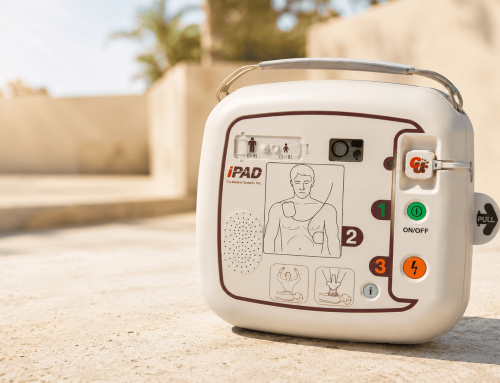
- Not checking first-aid kits, AEDs or other equipment
- Completing an assessment but not reviewing it when the organisation changes
- Assuming that calling 999 replaces the need for immediate first aid
Most of these problems are not caused by employers who do not care. They arise because the question has been reduced to, “How many people do we need to put on a course?”
The better question is, “What must be in place so somebody receives prompt, safe effective and competent help wherever and whenever our people are working?”
- What should employers look for in a first aid training provider?
HSE no longer approves general workplace first-aid training providers. Employers are responsible for selecting a competent provider.
When comparing providers, ask:
- Is the qualification regulated by an appropriate awarding organisation?
- How are trainers selected, monitored and kept up to date?
- Is practical competence properly assessed?
- Is the training adapted to the learners’ workplace risks?
- Is suitable equipment available for realistic practice?
- What quality assurance sits behind the course?
- Will the provider help you choose the appropriate training rather than simply sell the shortest option?
- What do previous learners and employers consistently say?
Essential 6 is a Qualsafe Awards centre delivering regulated first aid qualifications. We provide open courses at our Torquay training centre and onsite first aid training for organisations across the UK.
Our purpose is not simply to issue certificates. We want learners to leave able and willing to respond when somebody genuinely needs their help.
So, how many first aiders does your workplace need? There is no universal number.
Your answer must come from a suitable first aid needs assessment that considers:
- Workplace hazards and likely injuries
- The number of people present
- Shifts and working hours
- Holidays and other absences
- The size and layout of the site
- Multiple locations
- Lone, remote and mobile workers
- Distance from emergency help
- Employees with particular needs
- Members of the public and other non-employees
- Your history of accidents and illness
HSE’s indicative numbers are a useful starting point, but they should never replace thinking carefully about how your organisation actually operates.
The number of certificates in a spreadsheet is not the real measure of your provision.
The real measure is whether an appropriately trained, confident person will be available, with the right equipment, when an emergency happens.
Use our free online assessment tool or speak to the Essential 6 team. We can help you identify the appropriate first aid training course and arrange regulated first aid training at our Torquay centre or onsite at your workplace anywhere in the UK.
Call 01803 26 66 66 or email info@essential6.co.uk.
FAQ’s
Is there a legal ratio of first aiders to employees in the UK?
No fixed legal ratio applies to every workplace. Employers must carry out a first aid needs assessment and provide adequate and appropriate equipment, facilities and trained people based on their workplace circumstances.
Does every workplace need a trained first aider?
Not necessarily. A first-aid needs assessment may identify that an appointed person is sufficient in some small, lower-hazard workplaces. Other workplaces will need one or more people trained in Emergency First Aid at Work or First Aid at Work or additional specialist skills.
Does an appointed person count as a first aider?
No. An appointed person takes charge of first-aid arrangements and contacts the emergency services when required. They do not need first aid training and should not be counted as a trained first aider unless they also hold an appropriate current qualification.
What is the difference between EFAW and FAW?
Emergency First Aid at Work provides emergency level first-aid skills and is completed in 1 Day. First Aid at Work is broader and covers a wider range of workplace injuries and illnesses and completed over 3 days. The appropriate qualification depends on the findings of your first aid needs assessment.
Do I need additional first aiders to cover holidays and sickness?
Usually, yes. Employers must maintain suitable provision whenever employees are at work. The number trained should allow for foreseeable absences, shift patterns and staff turnover.
How long does a workplace first aid certificate last?
Emergency First Aid at Work and First Aid at Work qualifications are normally valid for three years. Employers should arrange requalification before expiry. The Health & Safety Executive also strongly recommends annual refresher training to help first aiders maintain their skills.
Does first aid provision need to cover visitors and members of the public?
The First Aid Regulations relate to employees, but the Health & Safety Executive strongly recommends that employers consider non employees when assessing provision. This may include customers, patients, service users, children, contractors and visitors.
Can Essential 6 help us assess our first aid requirements?
Yes. Employers can use the free Essential 6 First Aid Needs Assessment tool as a starting point or speak to the team for guidance about suitable regulated training, open courses and onsite delivery.