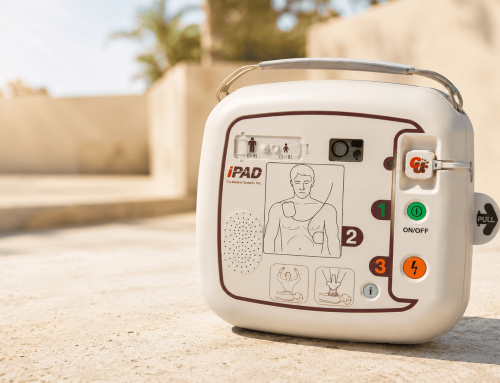
A defibrillator can be one of the most important pieces of lifesaving equipment in any workplace, school, care service, community venue, sports club or public building. But a defibrillator can only help in an emergency if it is working, accessible and ready to use.
This Check Your Defib Week, running from 15–21 June 2026, Essential 6 is encouraging businesses, care providers, schools, charities, community organisations and public-facing services to take a few minutes to check their defibrillator and make sure their team know what to do if someone suffers a sudden cardiac arrest.
Having an automated external defibrillator, commonly known as an AED or defib, is a positive step. However, owning a defibrillator is only part of the solution. The device needs to be checked, maintained, clearly signposted, accessible and supported by people who feel confident enough to act quickly.
At Essential 6, we deliver practical First Aid training, CPR and AED training, and we can also supply defibrillators for workplaces, care services, schools and community settings.
Why Check Your Defib Week matters
Every year, thousands of people in the UK experience cardiac arrest outside hospital. When this happens, time is critical.
Early CPR and early defibrillation can make a significant difference to a person’s chance of survival. A defibrillator is designed to be used by members of the public, workplace first aiders and trained responders. Modern AEDs provide clear voice and visual instructions, and they will only deliver a shock if one is needed.
However, simple and preventable issues can stop a defibrillator being ready when it matters most.
These may include:
- A flat or low battery
- Expired defibrillator pads
- Missing or damaged accessories
- Poor signage
- A locked or inaccessible cabinet
- Incorrect location details
- Staff not knowing where the defibrillator is kept
- The defibrillator not being registered or updated on The Circuit
These checks only take a few minutes, but they could make a life-saving difference in a real emergency.
What should you check on your defibrillator?
If your organisation has a defibrillator, someone should be responsible for checking it regularly. This person is often known as a defib guardian.
As part of Check Your Defib Week, we recommend checking the following:
1. Check the battery status
Most defibrillators have a visual status indicator showing whether the device is ready to use. This may be a green tick, flashing light or screen message, depending on the model.
Check that the defibrillator is displaying its rescue ready status and that there are no warning lights, error messages or audible alerts.
If the battery is low, expired or showing a fault, follow the manufacturer’s guidance and arrange a replacement as soon as possible.
2. Check the pad expiry dates
Defibrillator pads do expire. If the pads are out of date, damaged, opened or missing, the AED may not be usable in an emergency.
Check the expiry date on the electrode pads and make a note of when they need replacing. Replacement pads should ideally be ordered before the expiry date so your organisation is not left without a rescue-ready defibrillator.
3. Check the cabinet and access
If your AED is stored in a cabinet, check that the cabinet opens correctly and that the device can be accessed quickly.
Ask yourself:
- Is the cabinet easy to find?
- Is the defibrillator accessible during your opening or operating hours?
- Is the cabinet code known by the right people?
- Is the cabinet damaged, locked incorrectly or difficult to open?
- Is the defibrillator protected from weather if it is outside?
- Would a visitor, contractor or agency worker know where to find it?
A defibrillator that cannot be accessed quickly may not be effective when it is needed most.
4. Check the signage
People need to know where the defibrillator is before an emergency happens.
Check that your AED signage is clear, visible and easy to follow. Signs should help staff, visitors and members of the public locate the device quickly.
If your defibrillator is hidden in an office, cupboard or back room, it may be worth reviewing whether the location is suitable.
5. Check The Circuit listing
The Circuit is the national defibrillator network. It helps ambulance services identify the location of nearby defibrillators so they can direct people to them during an emergency.
If your defibrillator is not registered, or if the information is incorrect, emergency services may not be able to direct someone to it quickly.
Make sure your defibrillator is listed correctly and that details such as location, access times and availability are accurate.
6. Check staff confidence
A defibrillator is designed to be simple to use, but confidence still matters.
In a real emergency, people may panic, freeze or assume someone else will take control. Practical First Aid and AED training helps staff understand what to do, how to call for help, how to start CPR and how to use a defibrillator safely.
Training can help remove fear and replace it with clear, confident action.
First Aid and AED training for workplaces
Essential 6 delivers practical First Aid and AED training for businesses, care services, schools, public services, hospitality venues, construction companies, manufacturing sites, charities and community organisations.
Our training is designed to give learners confidence to respond when it matters most. We do not believe first aid training should simply be a tick-box exercise. It should be practical, engaging and relevant to the real situations people may face.
Our courses include:
- Emergency First Aid at Work
- First Aid at Work
- First Aid at Work Requalification
- Basic Life Support and AED training
- CPR and defibrillator training
- Paediatric First Aid
- Annual First Aid Skills Updates
- Bespoke first aid training for specific workplace risks
Whether you need regulated First Aid at Work training or a short AED awareness session for your team, Essential 6 can support your organisation.
Why AED training is important
Many people worry about using a defibrillator because they are afraid of doing something wrong. In reality, an AED is designed to guide the user through the process.
AED training helps learners understand:
- How to recognise cardiac arrest
- How to call emergency services quickly
- How to start effective CPR
- How to use a defibrillator safely
- Where to place the pads
- How to follow the device prompts
- How to work as a team during an emergency
- How to continue care until emergency services arrive
The aim is simple: to help people act quickly, safely and confidently when it matters most.
Essential 6 also supplies defibrillators
As well as delivering First Aid and AED training, Essential 6 can also support organisations that want to purchase a defibrillator.
If you are considering buying a defibrillator for your workplace, care service, school, sports club, community venue or public building, we can help you understand what to consider.
This may include:
- Choosing a suitable AED
- Indoor or outdoor cabinet options
- Defibrillator pads and battery replacements
- Ongoing maintenance checks
- AED signage
- Staff training
- Accessibility
- Registration on The Circuit
Buying a defibrillator is an investment in safety. The strongest approach is to combine the right equipment with the right training and a clear maintenance process.
Do you need a defibrillator in your workplace?
There is no single answer for every organisation, but many businesses and services are now choosing to install AEDs because they recognise the value of having lifesaving equipment available.
You may want to consider purchasing a defibrillator if you:
- Have staff, customers, residents, learners or visitors on site
- Work with older adults or people with known health risks
- Operate in a remote location
- Have a large workforce
- Run a public-facing venue
- Deliver sport, fitness or physical activity
- Manage a care service, school, hotel, office or community building
- Want to strengthen your emergency preparedness
- Want to improve your first aid provision
For care services, schools, leisure venues, hospitality businesses and public-facing workplaces, having a defibrillator can provide reassurance to staff, visitors, families and the wider community.
A simple defib check could save a life
Check Your Defib Week is a useful reminder, but defibrillator checks should not happen just once a year. AEDs should be checked regularly and someone within the organisation should take responsibility for making sure the device remains rescue-ready.
A few minutes checking the battery, pads, cabinet, signage and The Circuit listing could make all the difference in a real emergency.
If your organisation has a defibrillator, check it today.
If your organisation does not yet have one, or if your team would benefit from practical First Aid and AED training, Essential 6 can help.
Book First Aid and AED training with Essential 6
Essential 6 delivers high-quality, practical First Aid and AED training across the UK, including open courses and onsite training for organisations.
We can also supply defibrillators and help you put the right training and checking arrangements in place.
To speak to us about First Aid training, AED training or purchasing a defibrillator, contact Essential 6 today on 01803 26 66 66 or email info@essential6.co.uk
Visit: www.essential6.co.uk